Work experience
Where I've worked
Paid roles — full write-ups of the problem, approach, and outcome.
Product work I've shipped, plus a voluntary growth role. Browse the gallery, or read the full story behind each one — the problems, the roadmap phases, and the real numbers.
Paid roles — full write-ups of the problem, approach, and outcome.
Self-directed concepts and founder projects, not paid roles.
Unpaid, ongoing community involvement.
Kirro: AI Job Search Assistant — an AI job search platform now used across 5+ countries, built on a deliberately unfashionable bet: humans before automation.
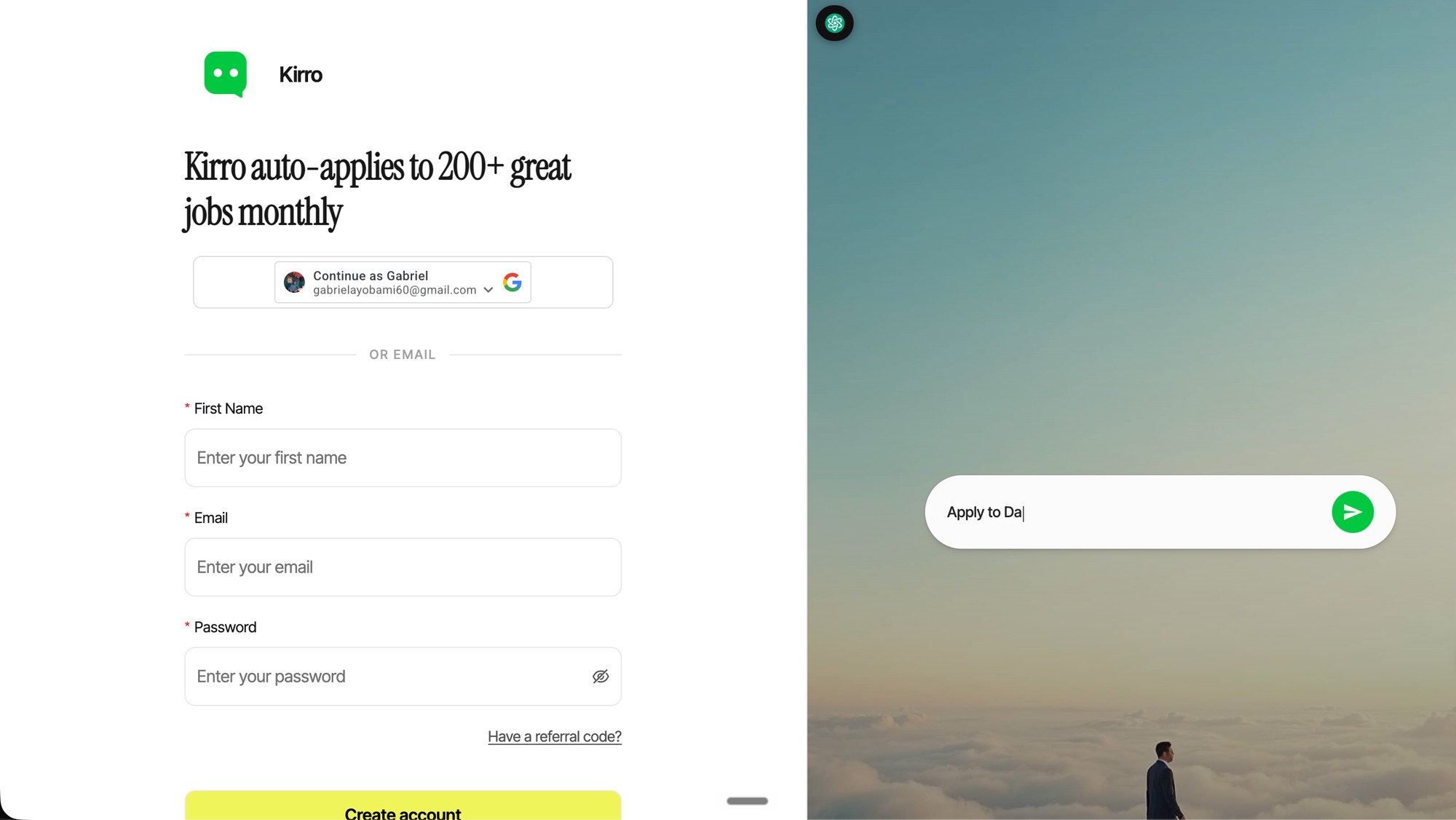
Kirro · AI job search — Onboarding redesign
Kirro's first-run experience was asking new users for everything before it showed them anything. I reframed onboarding around a single job-match moment, cut the intake down to what the matching model actually needed, and let the AI do the first piece of work in front of the user. Adoption of the core feature rose by roughly a quarter.
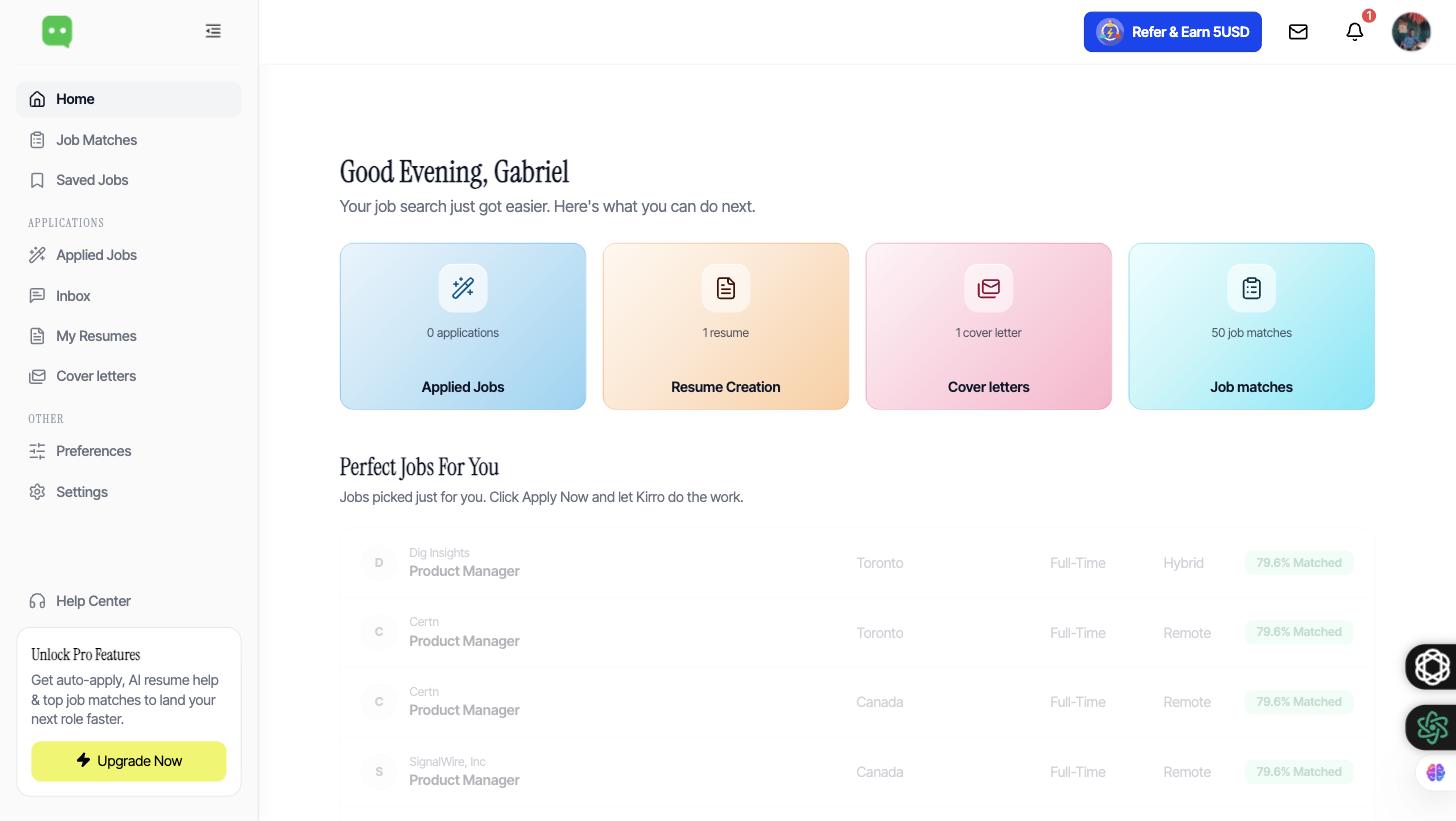
The Kirro dashboard: a personalised job search command centre — job matches with fit scores, applications tracked, auto-apply active.
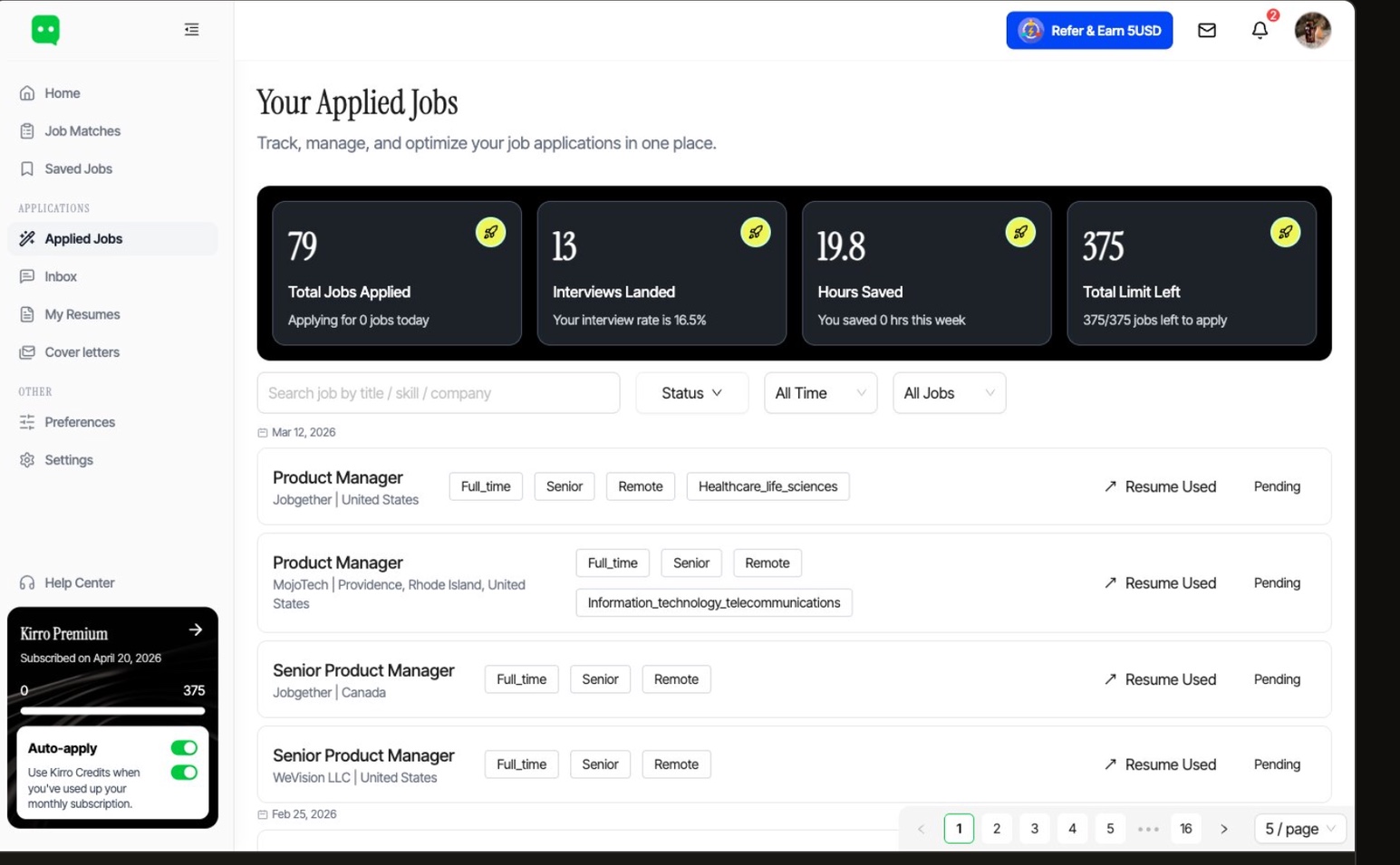
Every application tracked automatically — status, resume used, and running totals for hours saved and interview rate, updated in real time.
Kirro now runs across 5+ countries for tech professionals in product, engineering, design and data — applying to 200+ jobs a month per user, automatically.
Job hunting hadn't changed in a decade. Kirro rebuilt it around one thing: hours saved.
Tech professionals were losing 10–15 hours a week to applications: tailoring resumes by hand, re-entering the same fields on every platform, tracking it all in spreadsheets, with almost no signal on what was working. Kirro replaces that grind — upload a resume once, and the platform matches, tailors, applies, and tracks every application for you.
Humans apply on behalf of users.
AI recommends, humans verify.
Automated matching and application at scale.
"We relied on humans to learn what the automation should eventually do. We weren't being slow. We were being precise." — Kirro's product philosophy
As Product Manager, I own the roadmap for Kirro's matching and application experience — research, prioritisation, and the Mixpanel analytics that decide what we build next — working alongside the founding team as the platform moves from a human-in-the-loop model toward a fully agentic job search assistant that reasons and acts across a candidate's entire search, from sourcing to interview prep, with a human always able to step in.
A church community app for sermons, events, donations and pastoral care.
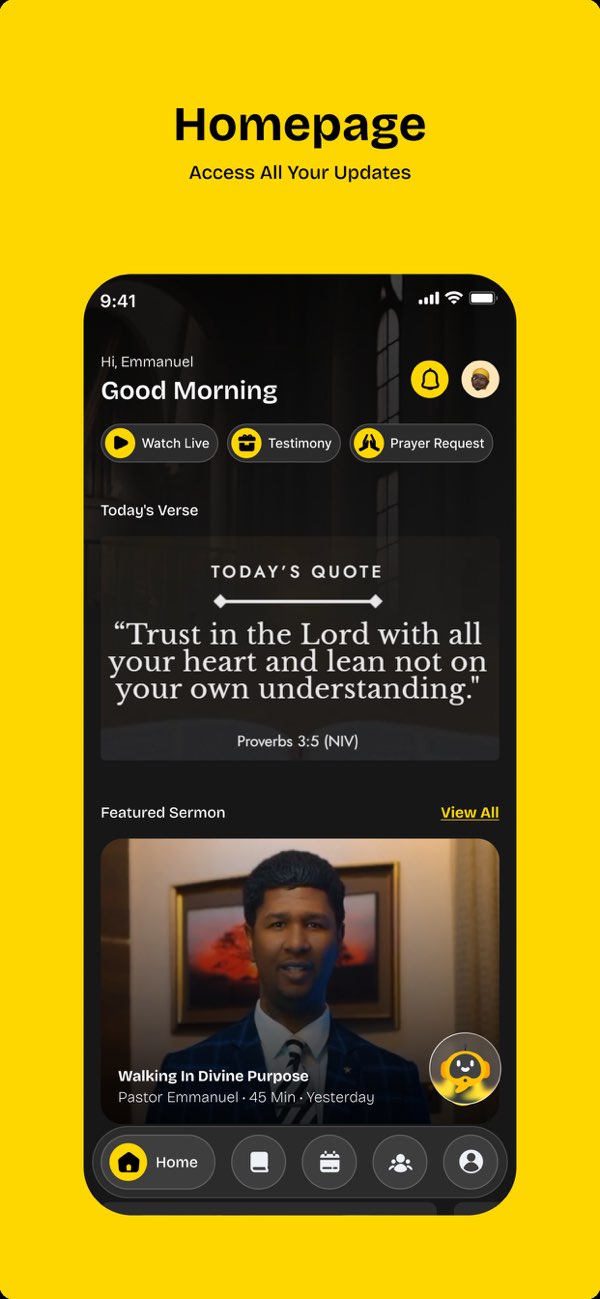
The home screen — daily verse, featured sermon, and one-tap access to Watch Live, Testimony and Prayer Request.
Co-led end-to-end development of the app as contract Product Manager — authentication, events, donations and AI-assisted support — authoring the PRDs and user flows that cut engineering handoff ambiguity, and sequencing the launch backlog against a fixed contract timeline so core flows shipped on schedule.
Donations, events, Bible devotionals, testimonies and sermons — the foundation of the app.
Building a community layer so members connect with each other, not just with content.
An AI chatbot for everyday spiritual questions — anything serious hands off to a real pastor.
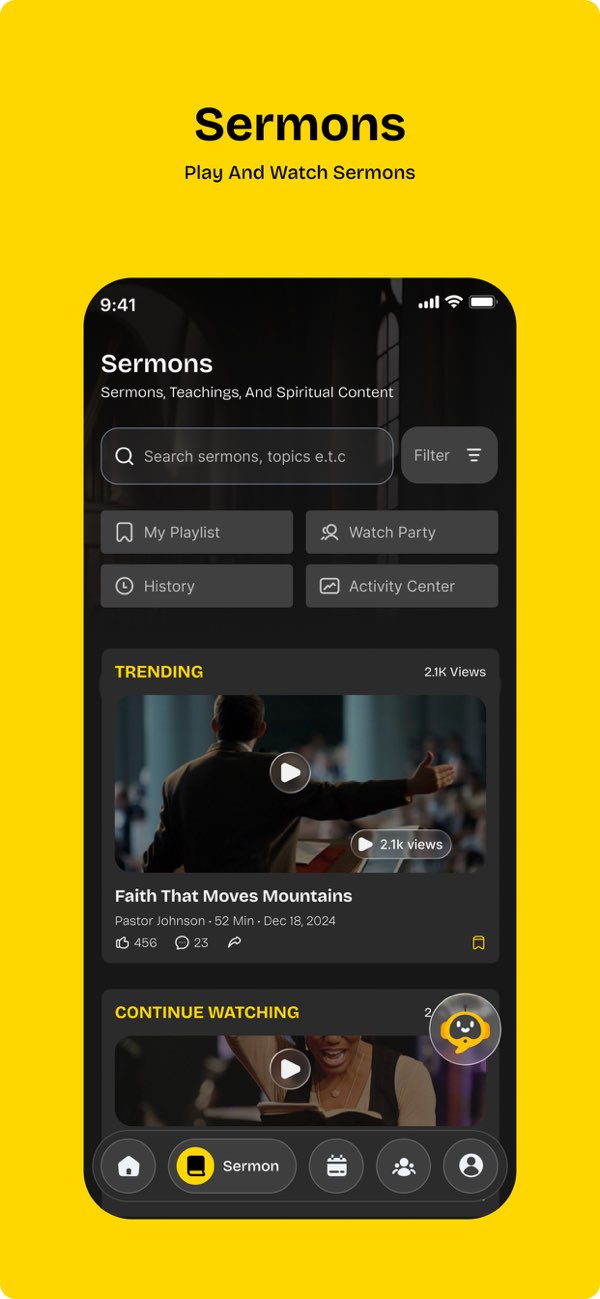
The sermons library — search, trending talks and continue watching, with "Chat with Pastey" one tap away.
Easy Producting is a community where product people grow together — a small, application-only group built on real conversations, real mentorship, and access to people a few steps ahead.
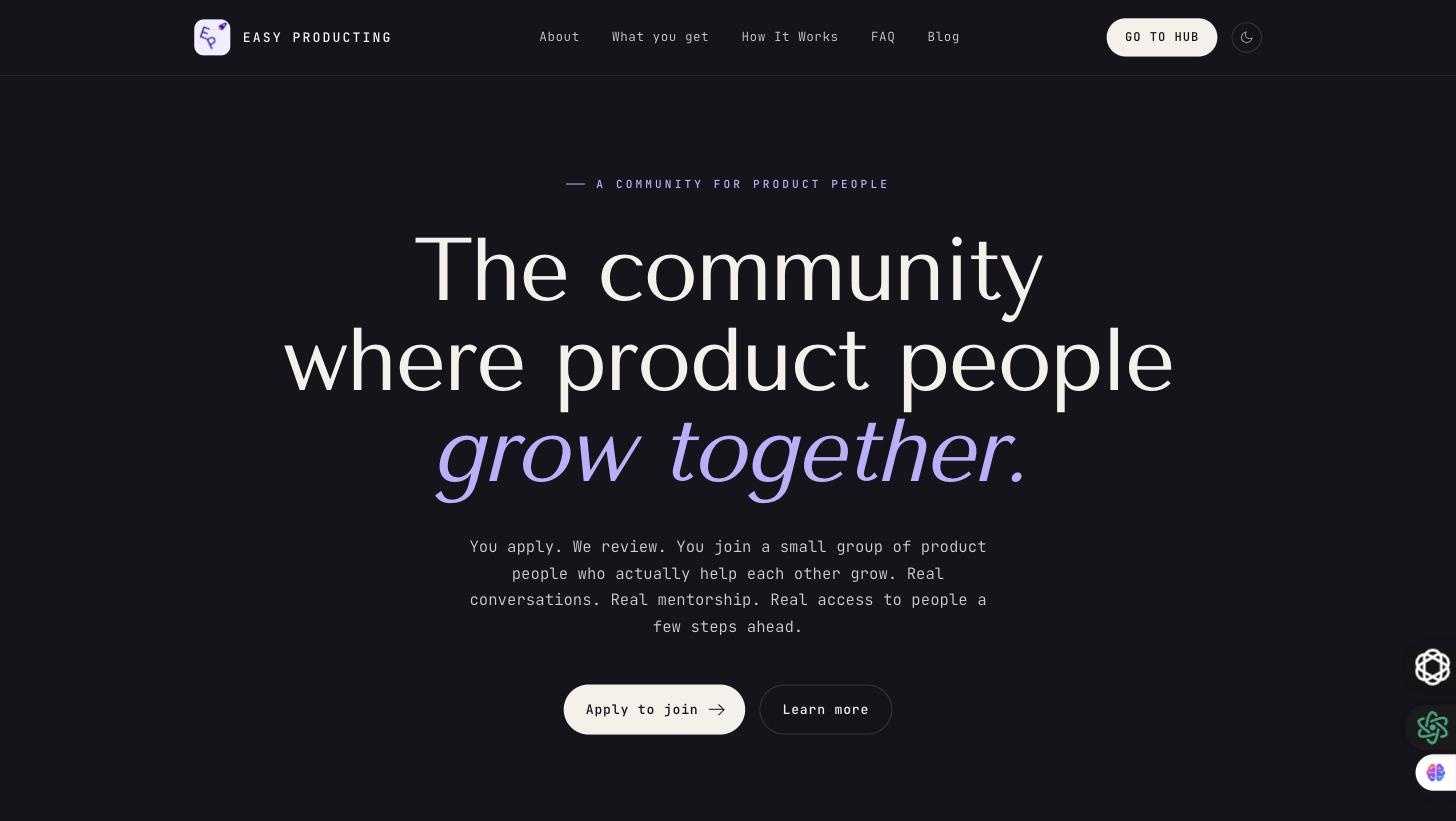
As voluntary Growth Manager, I work alongside the founder and a small volunteer team on the parts of the funnel that get people in the door and keep them there: Awareness & Acquisition (visuals, messaging, sign-off on ads and organic outreach), Activation (turning a signup into someone who actually logs in and uses the platform), and Engagement (keeping active members active). I do it because I'd rather help build the kind of community I wish I'd had earlier in my own product career.
A feature concept that lets users retrieve scripture by speaking naturally, so quiet time is never interrupted by a manual search.

Finding scripture shouldn't interrupt quiet time.
One morning during my own quiet time, a scripture came strongly to mind — I remembered the words, but not the exact reference. Finding it meant unlocking my phone, opening Google, and typing part of the verse. It only took a minute, but it broke the flow of prayer.
When people recall scripture, they often remember phrases, themes, or parts of a verse — but not the exact book, chapter, or verse number. That sends users out of their devotional moment and into a manual search, at the exact time it should feel peaceful and uninterrupted.
"People remember verses, not references." — Key insight, after reviewing YouVersion, Bible Gateway and Logos
Voice-to-Scripture is a voice-powered search feature: tap the microphone, speak the verse or phrase you remember, and retrieve it instantly — no typing, no navigating through books and chapters.
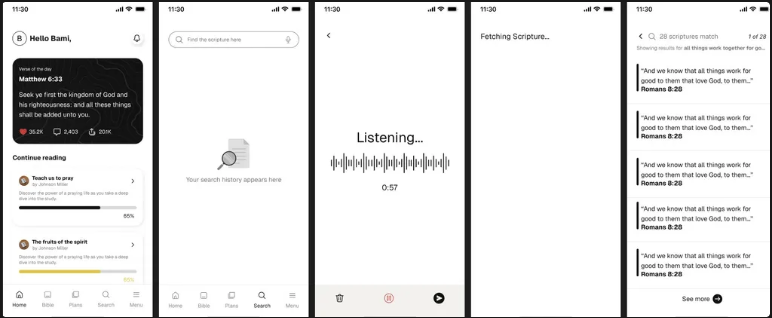
The flow: Home → Search → Voice Listening → Fetching Scripture → Results.
High impact, medium complexity — directly solves the problem of interrupted quiet time.
Medium impact, medium complexity — useful for exploration, less tied to the core pain point.
Medium impact, low complexity — improves engagement, but doesn't solve retrieval during devotion.
Voice feature adoption (share of users using voice search), time-to-scripture (goal: cut lookup time in half), and engagement (how often voice search is used during devotional sessions).
This concept started from a small but meaningful moment of friction. By designing around how people actually recall scripture — phrases and themes, not references — Voice-to-Scripture turns a disruptive search task into something that feels as natural as remembering the verse itself.
WeatherFit tells you what to wear before you open the wardrobe — real weather, your own tolerance for it, and a straight answer every morning.
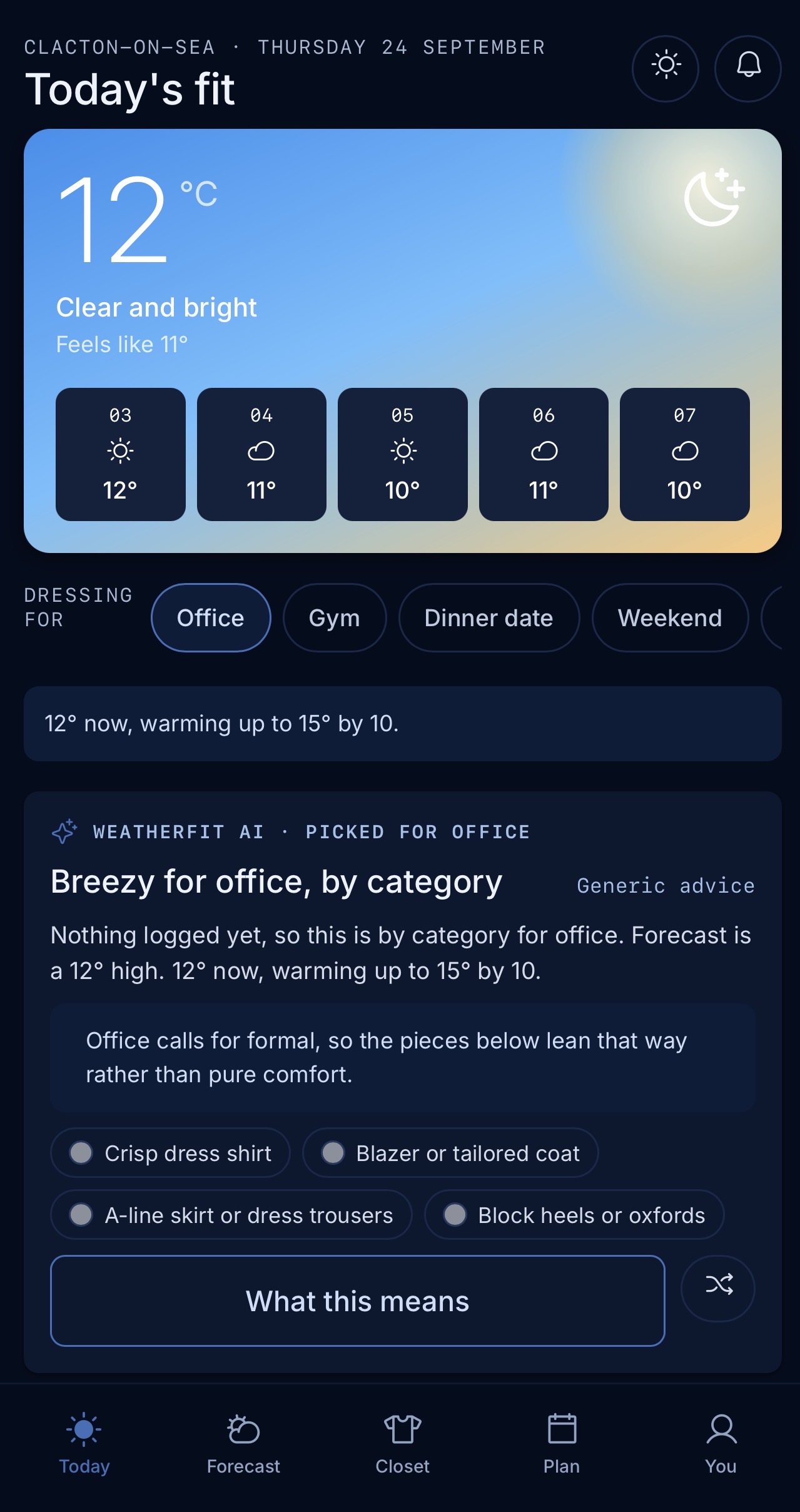
A forecast tells you the temperature. It doesn't tell you what to put on.
Weather apps report a number and leave the translation to you — factoring in how you personally handle cold, what's actually clean in your closet, and what the day calls for. WeatherFit does that translation: it reads the real forecast against your own temperature tolerance and your logged wardrobe, and gives a straight outfit recommendation instead of a number to interpret.
As founder, I'm designing and building WeatherFit end-to-end — onboarding, the recommendation engine, closet management, and an in-app styling assistant — currently in active development ahead of a public launch, with a live preview already deployed.